Many people feel like they are always one step behind with their money. Not because they are irresponsible, but because life moves quickly: bills shift, plans change, surprises appear, routines break. It is easy to lose track, and easier still to feel overwhelmed by the idea of getting everything under control.
Lighthouse does not promise perfection. It is built to give you clarity and a sense of direction, so money decisions stop carrying so much weight.
Why money often feels overwhelming
Life moves fast, and money follows
Your expenses shift month to month. Income is not always predictable. New priorities appear without warning. When everything changes at once, even a simple question — can I afford this today? — feels heavier than it should.
Most tools add pressure instead of clarity
Many budgeting tools expect long sessions, detailed tracking, strict rules, or perfect discipline. When you are already busy, those systems become another task on the list. Instead of reducing anxiety, they add to it.
Feeling behind is normal, but not permanent
Most people have periods when their money feels out of sync with their real life. Clarity is possible, and it does not require a dramatic change — only a calmer way of looking at things.
What we believe
Perfect months are rare
We do not believe in flawless budgets or perfect months. Life is too dynamic for that. Lighthouse gives you a place to understand what is happening now and adjust when things shift.
You know your life best
The app never tells you what you should do. You make the decisions; Lighthouse helps you see them clearly. Your plan, your priorities, your pace.
A budget that moves with you
Plans change, and a budget should change with them. You can edit categories, move money, or shift goals at any time. Nothing is locked in.
How that works in practice
A clear picture of what you have
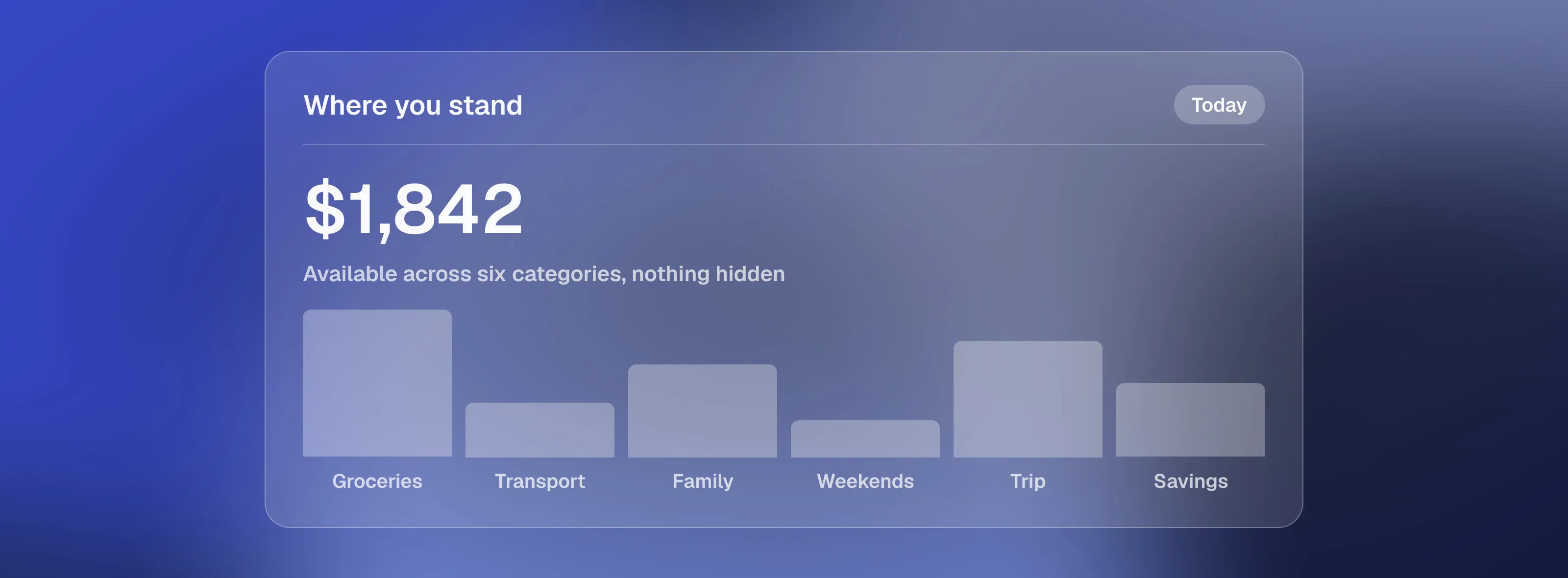
Your income, upcoming bills, available money and goals sit in one view that is readable at a glance — no spreadsheets, no clutter.
Categories that reflect real life
Categories can be simple, natural and personal. Groceries, weekends out, family, upcoming trip — whatever matches your actual world. Clear names make decisions lighter, which is why naming categories well is one of the habits we recommend most.
A calm way to plan your month
Planning takes a few minutes. You decide what your money is meant for this month, and that is the whole exercise.
Flexible adjustments at any moment
If something unexpected happens, you move money between categories. Adjusting is not a failure — it is budgeting that respects real life.
Built for how money actually feels
Less guilt, more clarity
Budgeting often brings guilt: for spending too much, for not tracking well enough, for not being disciplined. When you can see your real situation clearly, decisions become easier and kinder without needing the guilt at all.
Space for joy and priorities
A healthy budget is not only bills. It includes small pleasures, meaningful plans and long-term goals, and keeping those visible is what makes money feel connected to your life rather than separate from it.
A kinder way to build habits
You do not need hours of tracking or perfect accuracy. A few small consistent habits, supported by a simple interface, build confidence over time.
What changes over time
Most people do not describe a breakthrough. They describe three quieter things:
- knowing where they stand, so decisions stop feeling risky
- choices getting simpler, because the picture is already in front of them
- the sense of being behind fading, because nothing is accumulating unseen
Look at the month you are in
You do not need a big plan to begin. Look at your month, notice what is coming up, and see what feels important right now. Even a few minutes of awareness changes how money feels. If you want a method to structure it, zero-based budgeting is where we would start.