Starting to pay attention to your money usually comes with hope, and a little fear. Hope that things might finally feel clearer. Fear that it will be hard, uncomfortable, or that you will do it wrong.
Before you build your first budget, track your first expenses, or plan your first month, there are a few things worth knowing. Not as rules, but as context — so you do not expect instant clarity from a process that unfolds over time.
The first months are often the hardest
Everything is new at the start
At the beginning, budgeting rarely feels calm. It feels unfamiliar. Sometimes messy. Sometimes confusing. You are seeing numbers you may not have looked at closely before. You are noticing habits you did not track. You are learning how your real life fits into categories.
That alone can feel heavy. It does not mean budgeting is not working. It usually means it is.
Awareness comes before ease
The first stage is not control. It is awareness, and awareness can feel uncomfortable before it feels empowering.
It is normal if the first weeks bring more questions than answers. Clarity rarely arrives all at once — it builds quietly.
You might wonder why you are doing this at all
When results are not emotional yet
In the beginning, a budget often looks like numbers on a screen. The emotional shift — calm, confidence, lighter decisions — usually comes later. At first it may feel like extra effort without a clear reward.
This phase passes. Most people do not feel the benefit immediately. They start noticing it in small moments:
- “I did not panic before buying this.”
- “I knew exactly where that money would come from.”
- “I did not avoid looking this week.”
That is where change actually begins.
Confusion is part of the process
You are building a system that did not exist before
Categories will not feel perfect. Your first plan will not match your real month. You will forget things. You will move money. You will adjust a lot.
This is not a mistake. This is how a personal system takes shape. You are not filling out a template — you are discovering how your life works financially.
Your categories settle with time
Over time your categories will start making sense, your monthly rhythm will soften, and your adjustments will get smaller. But in the beginning, everything is allowed to be a draft.
A budget is not a test you pass or fail. It is a description of your life that gets more accurate the longer you keep writing it.
Opening the budget often is enough
Consistency matters more than intensity
You do not need long sessions. You do not need perfect records. You do not need motivation. What actually helps is simple presence:
- opening your budget
- noticing what changed
- moving money when life moves
- returning without guilt
Five calm minutes done often will always matter more than one perfect setup.
Progress often looks quieter than you expect
It is not a dramatic after picture
For most people, progress does not feel like a breakthrough. It feels like less tension, fewer surprises, lighter decisions, more honest choices, and less avoidance.
You may not notice a big moment. You may just realise one day that money feels quieter. That is progress.
There are no wrong steps here
You will not ruin a month. You will not break your budget. You will not fall behind forever.
You will adjust. You will learn. You will change your plan. That is not failure — that is the practice.
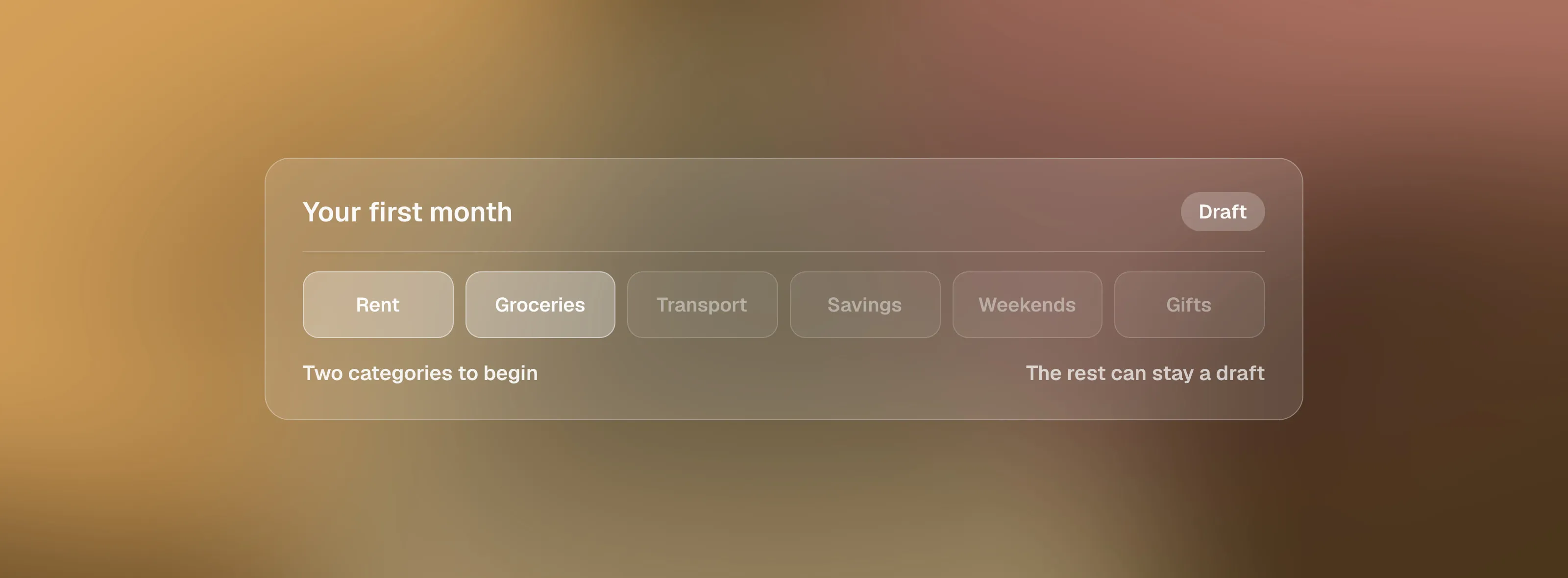
Start with one month and a few categories
You do not need to understand everything before you start. You do not need the perfect structure. You do not need confidence. You can begin with:
- one month
- a few categories
- a realistic number
- a little curiosity
Everything else grows from there. If you want a method to begin with, zero-based budgeting is the one we would suggest first.